
All About Seabirds / Black Guillemot
Black Guillemot
Cepphus grylle
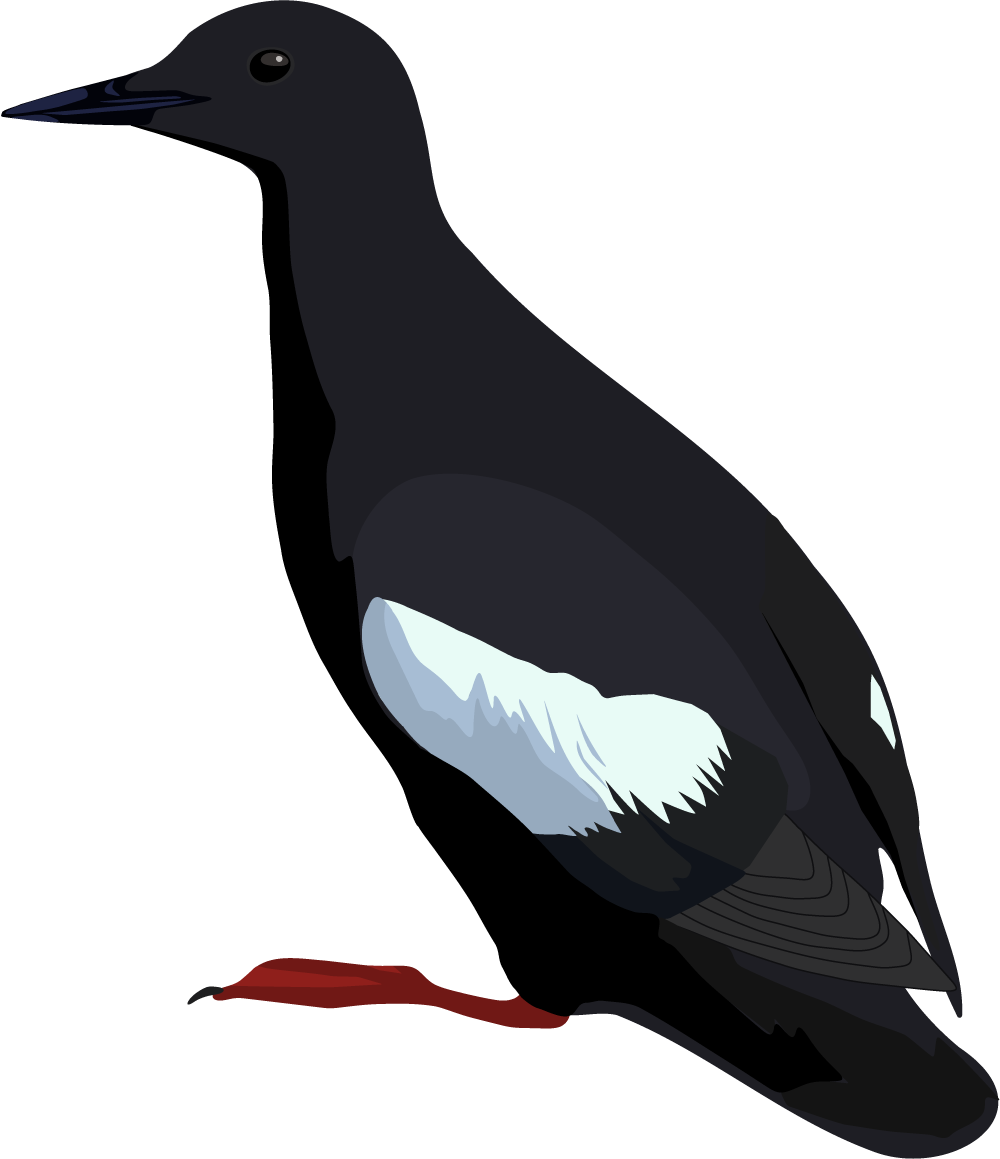
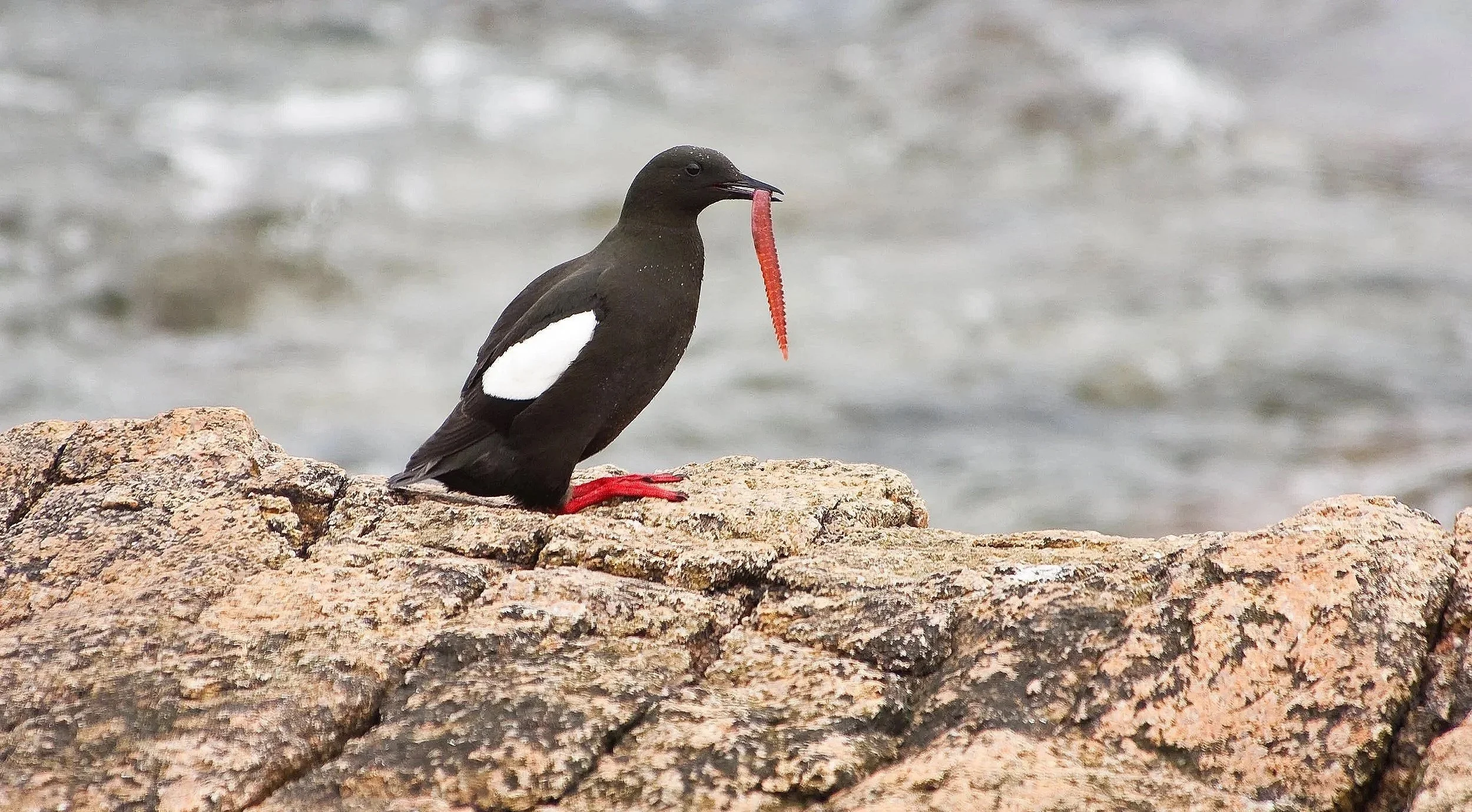
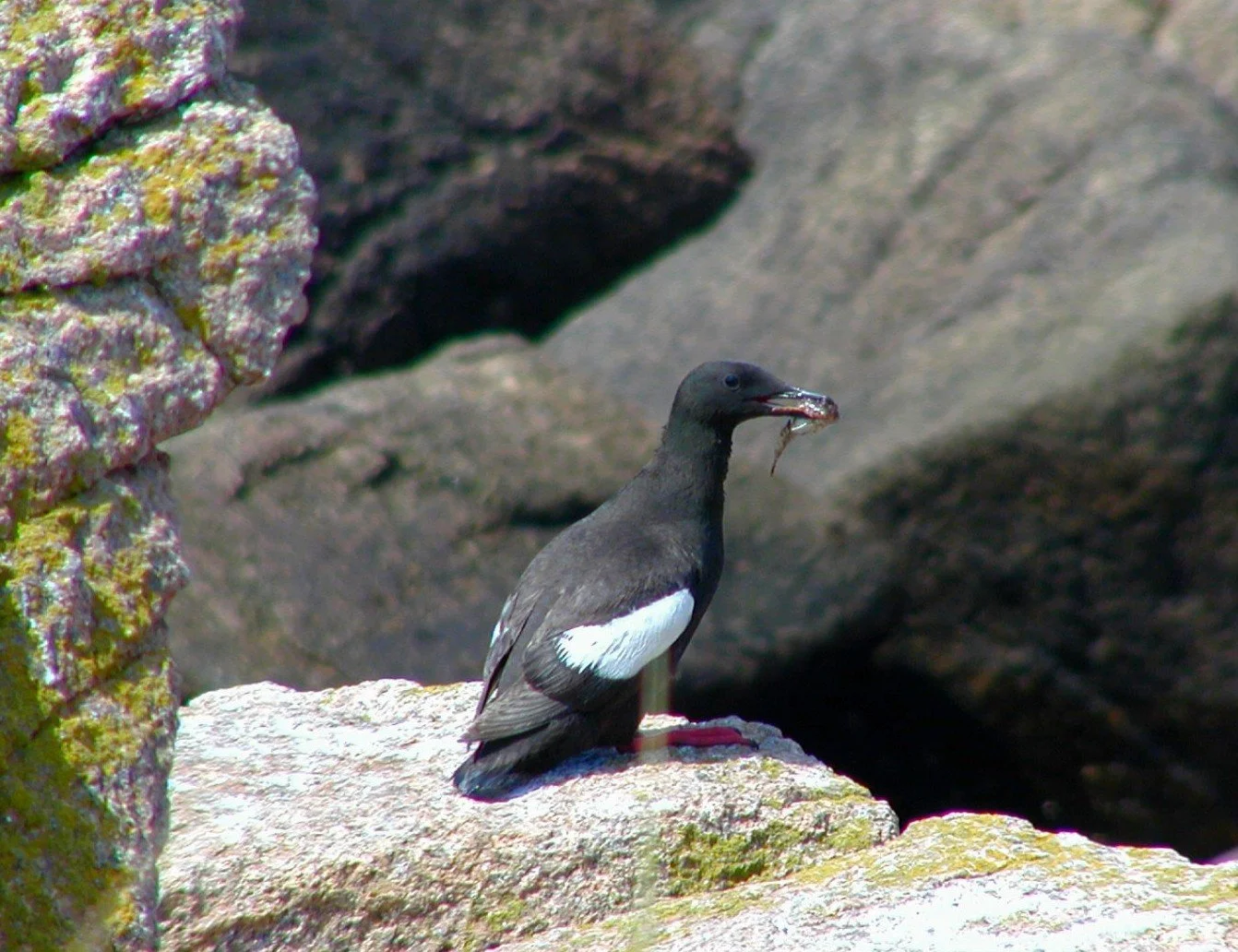
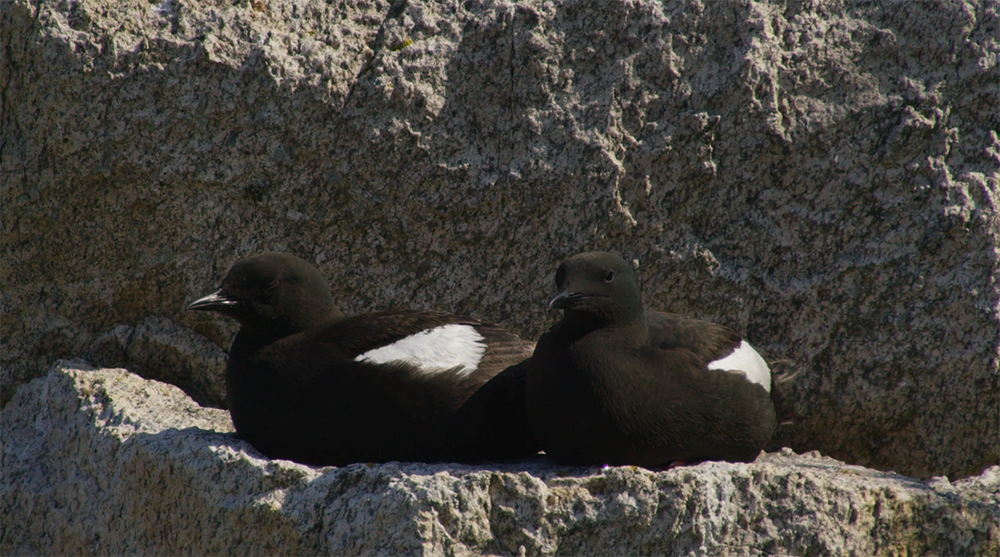
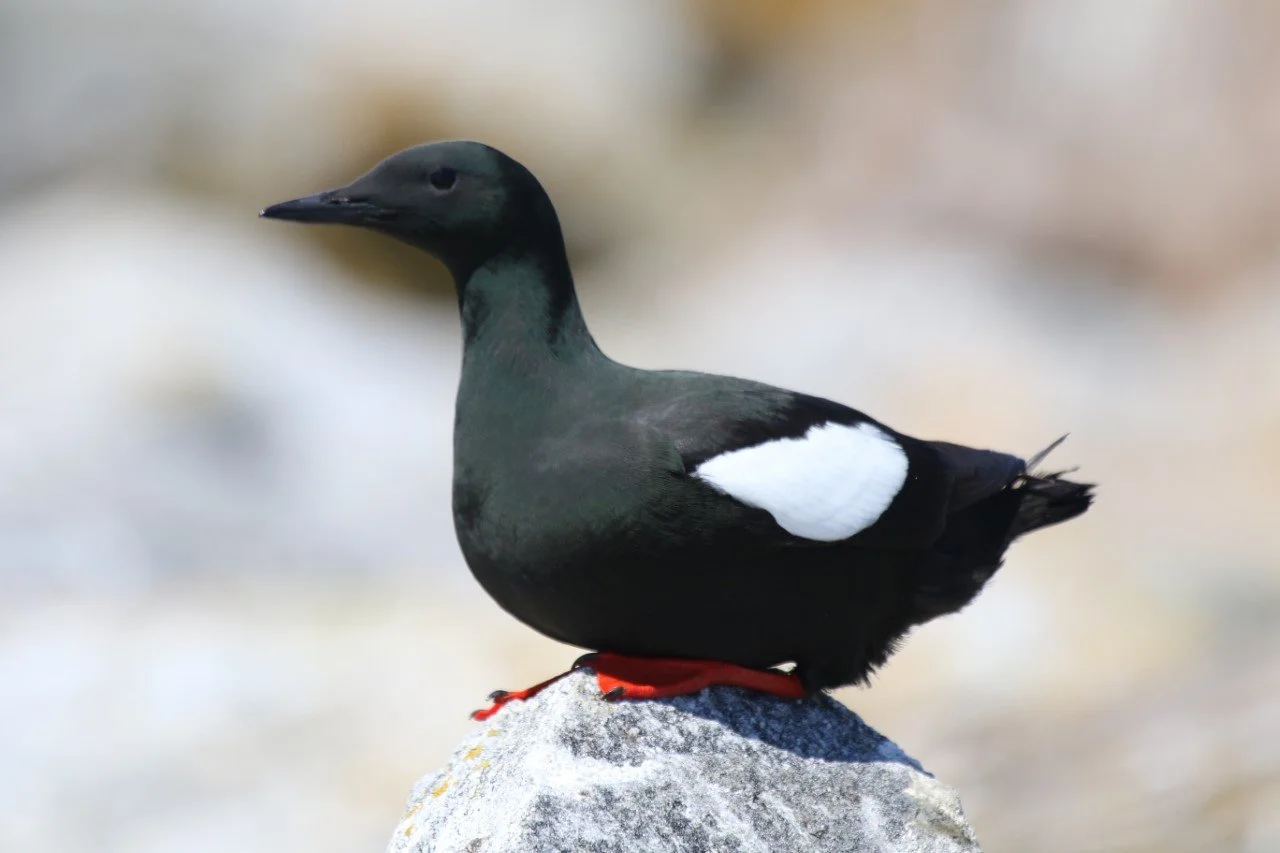
These elegant auks are very similar to their cousins, the Common Murre, but with the noticeably different egg-shaped white spots on their wing feathers, a fully black breast, and bright red feet.
Black Sheep of the Auk family
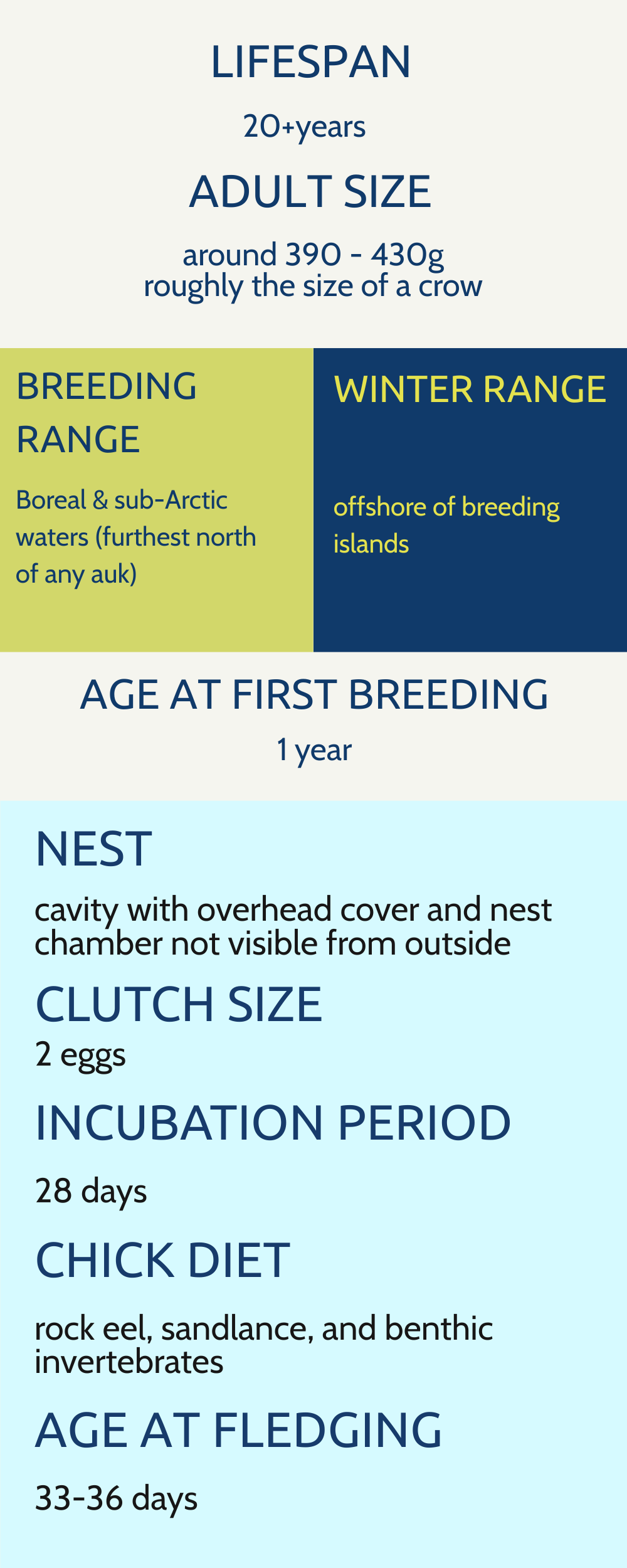
Black Guillemot’s are very similar to the other members of their family, the auks. However, unlike Atlantic Puffins, Razorbills, and Common Murres who lay only one egg each breeding season, the Black Guillemot lays two eggs!
Black Guillemots are also more semi-colonial than the other alcids. In Maine, they breed on many more islands than other alcids (approximately 166 islands) with an estimated population of around 12,000 adults during the last population survey!
Outliers
Black Guillemots have a breeding range that extends farther north than any other auk! They are also distinct from Atlantic Puffins and Razorbills in that they forage primarily in inshore rocky coasts, mainly taking prey from the bottom. In contrast, Atlantic Puffins and Razorbills feed in continental shelf waters.
Joint Parenting
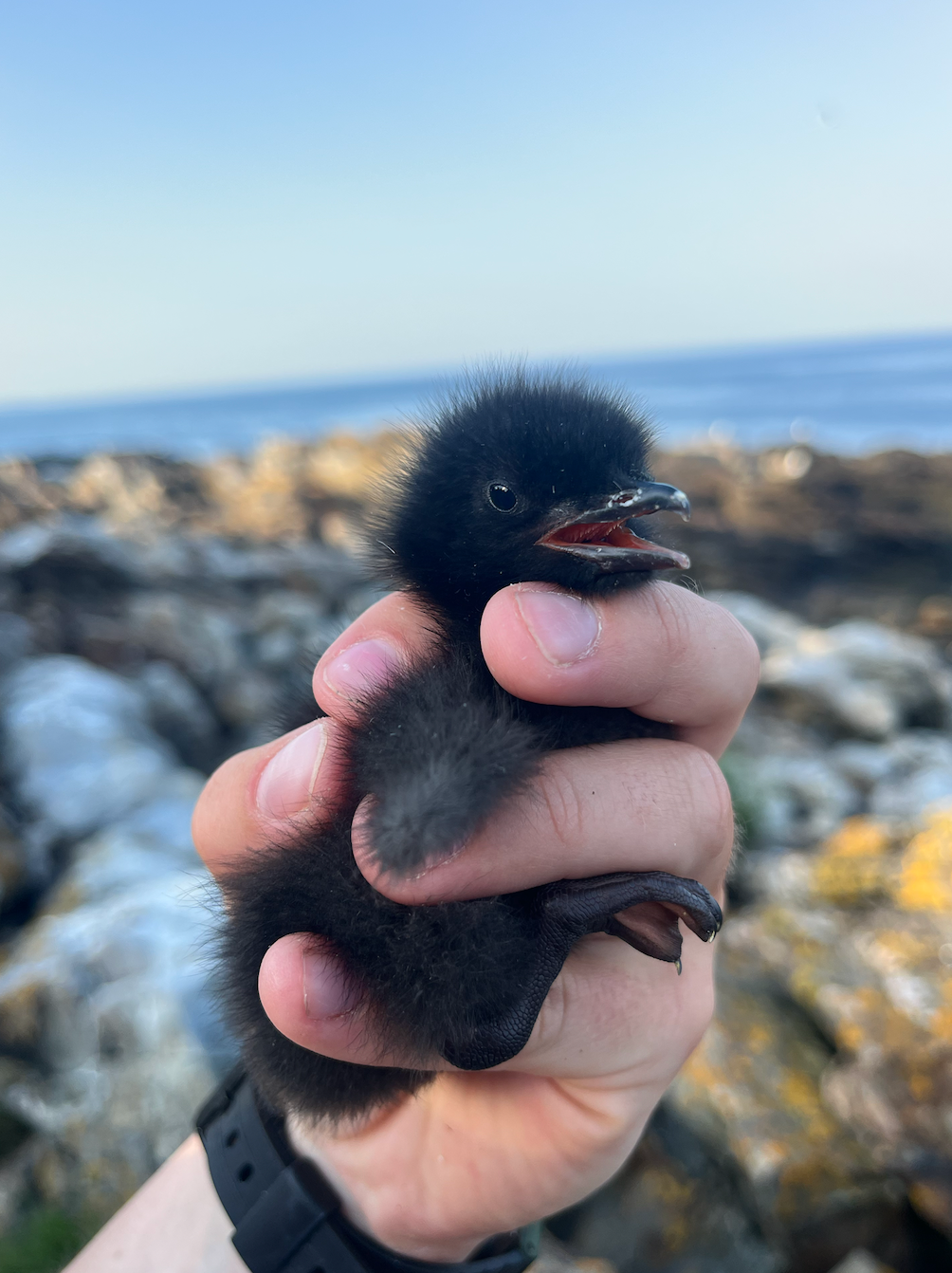
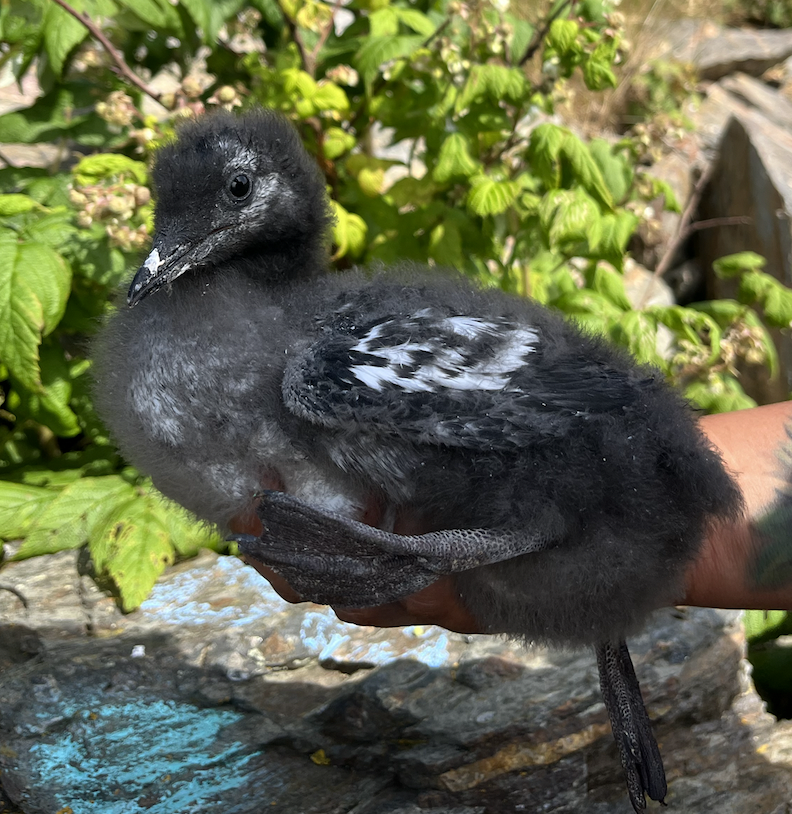
Both male and female Black Guillemot parents develop incubation patches - a loss of feathers below the sternum that allows for better heat transfer to eggs. After their eggs hatch, the Black Guillemot parents will spend up to four days brooding them. Brooding is the act of keeping chicks warm with the use of parental body heat after they have hatched. After this precarious stage, both parents leave the nest to find food for the newly hatched baby.
Where Can I See Black Guillemots in Maine?
If you’re hoping to catch a glimpse of Black Guillemots in Maine, your best bet is to take a guided boat tour around the islands in the Gulf of Maine.
Please browse one of our highly recommended tour boat operators in the down east area. You’ll likely spot several other seabirds during your tour, including Atlantic Puffins and Razorbills.
As you continue learning about Black Guillemots, we hope you’ll be inspired to help us protect these fascinating creatures and their habitats!