
All About Seabirds / Leach’s Storm-Petrel
Leach’s storm-petrel
Hydrobates leucorhous
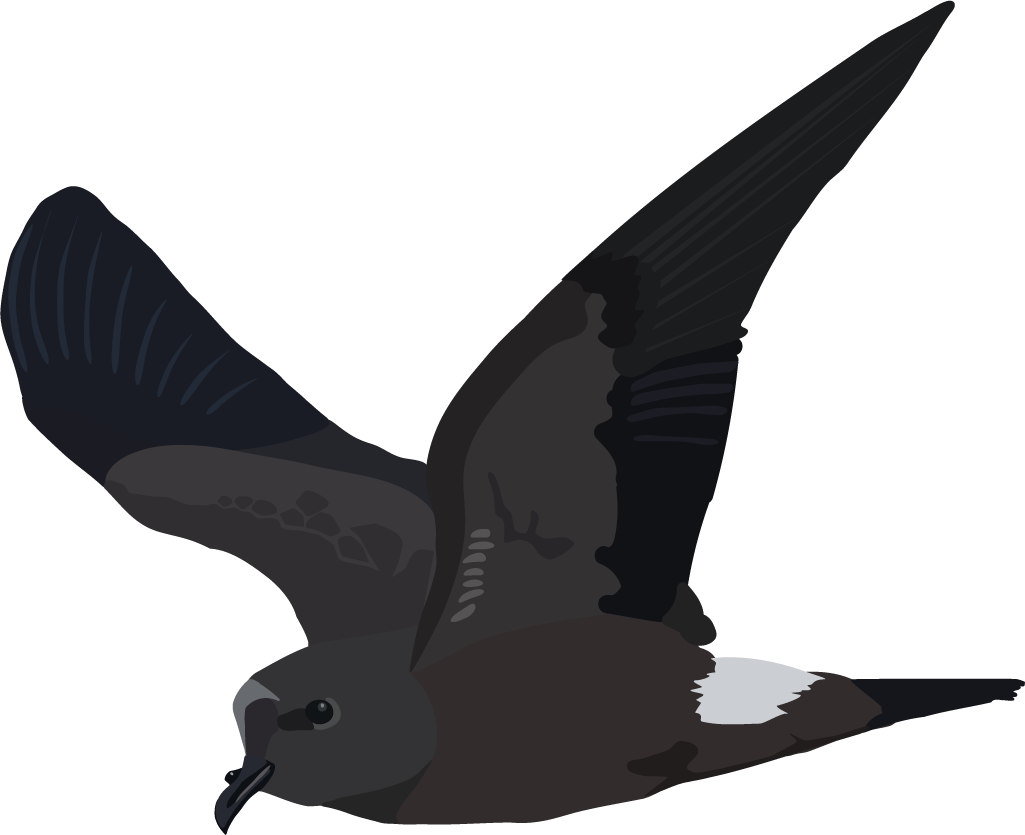
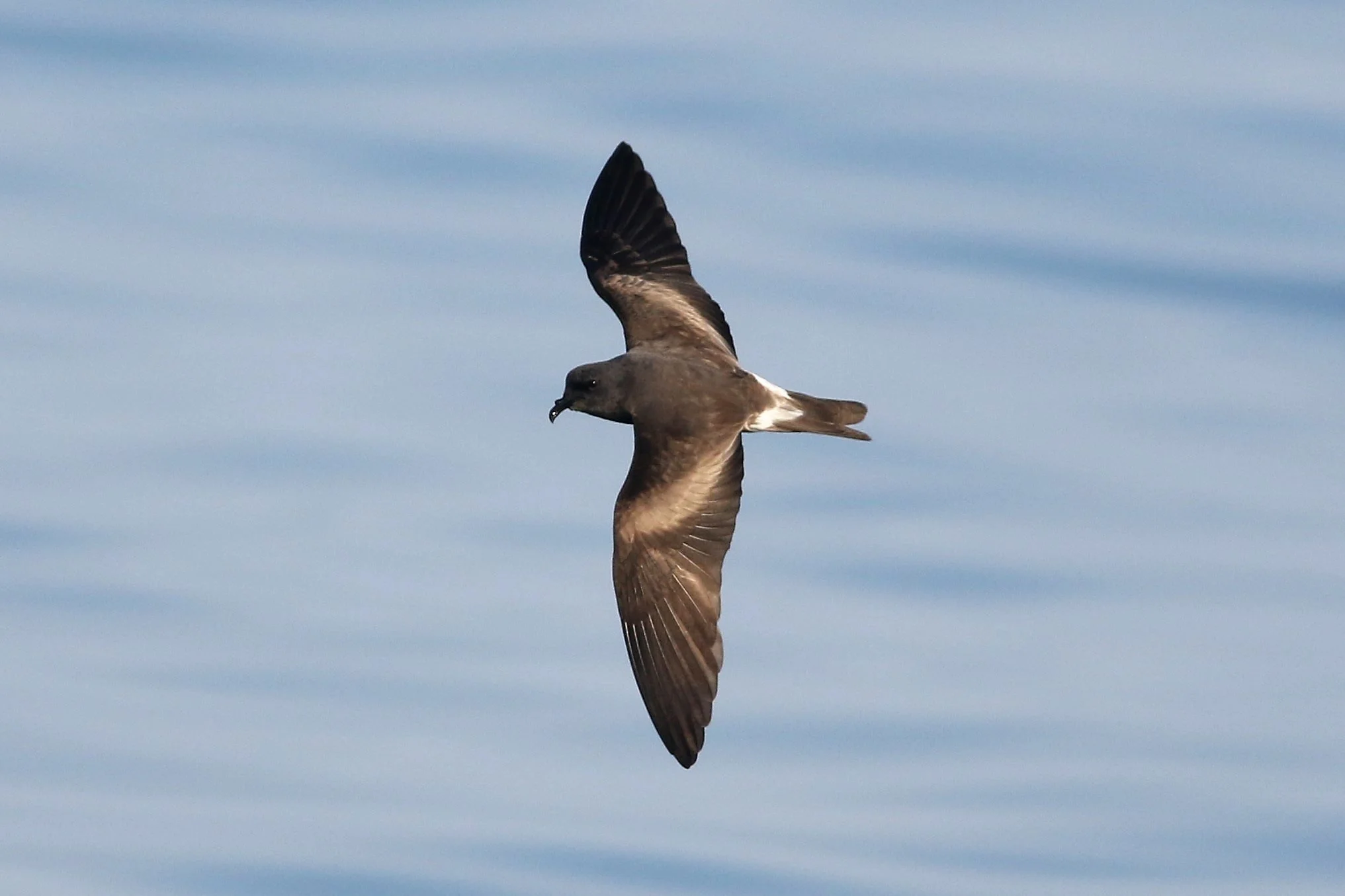
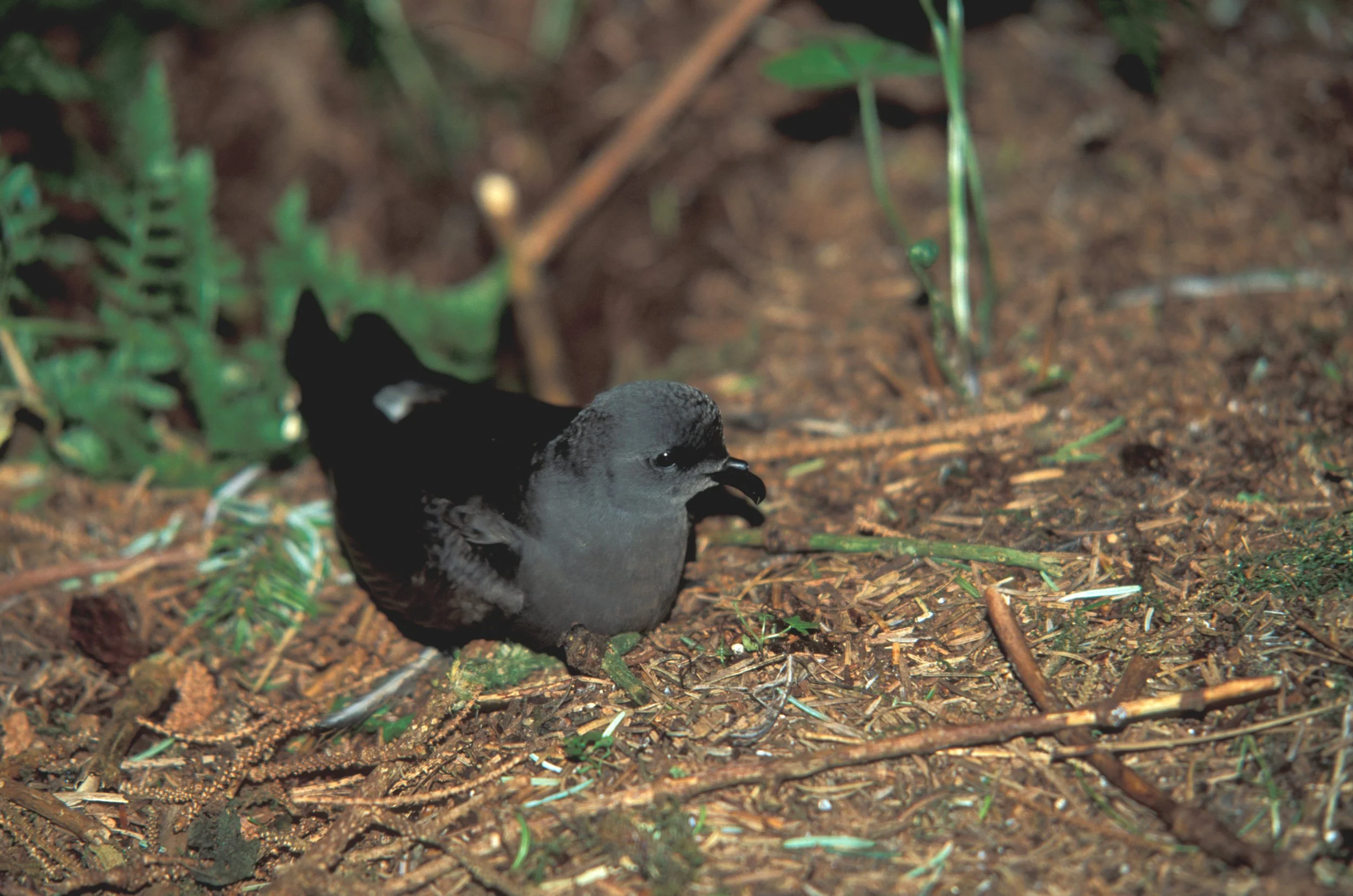
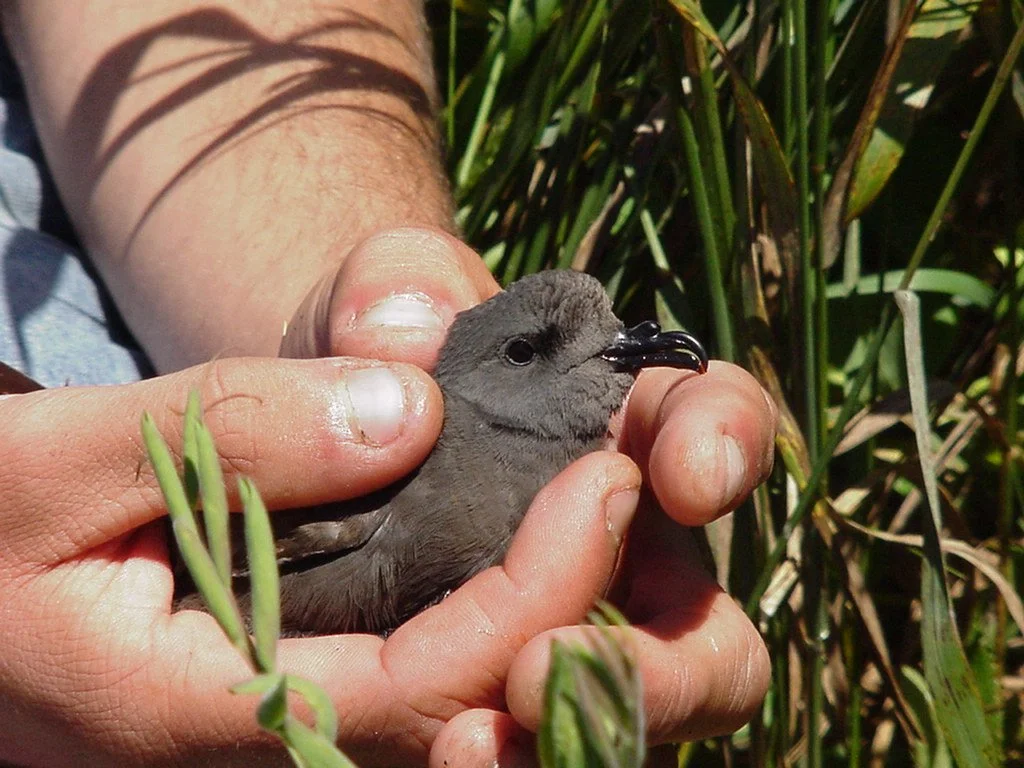
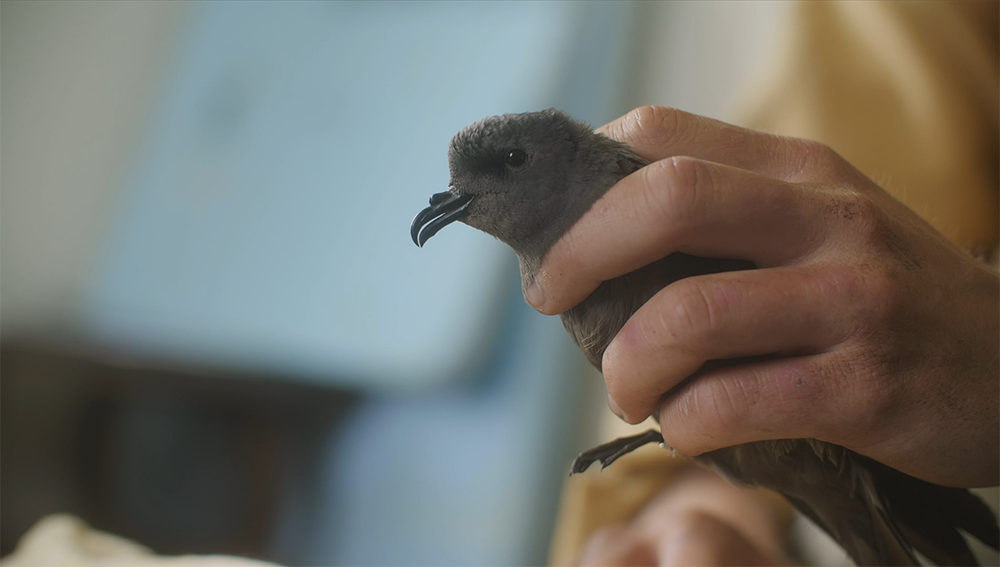
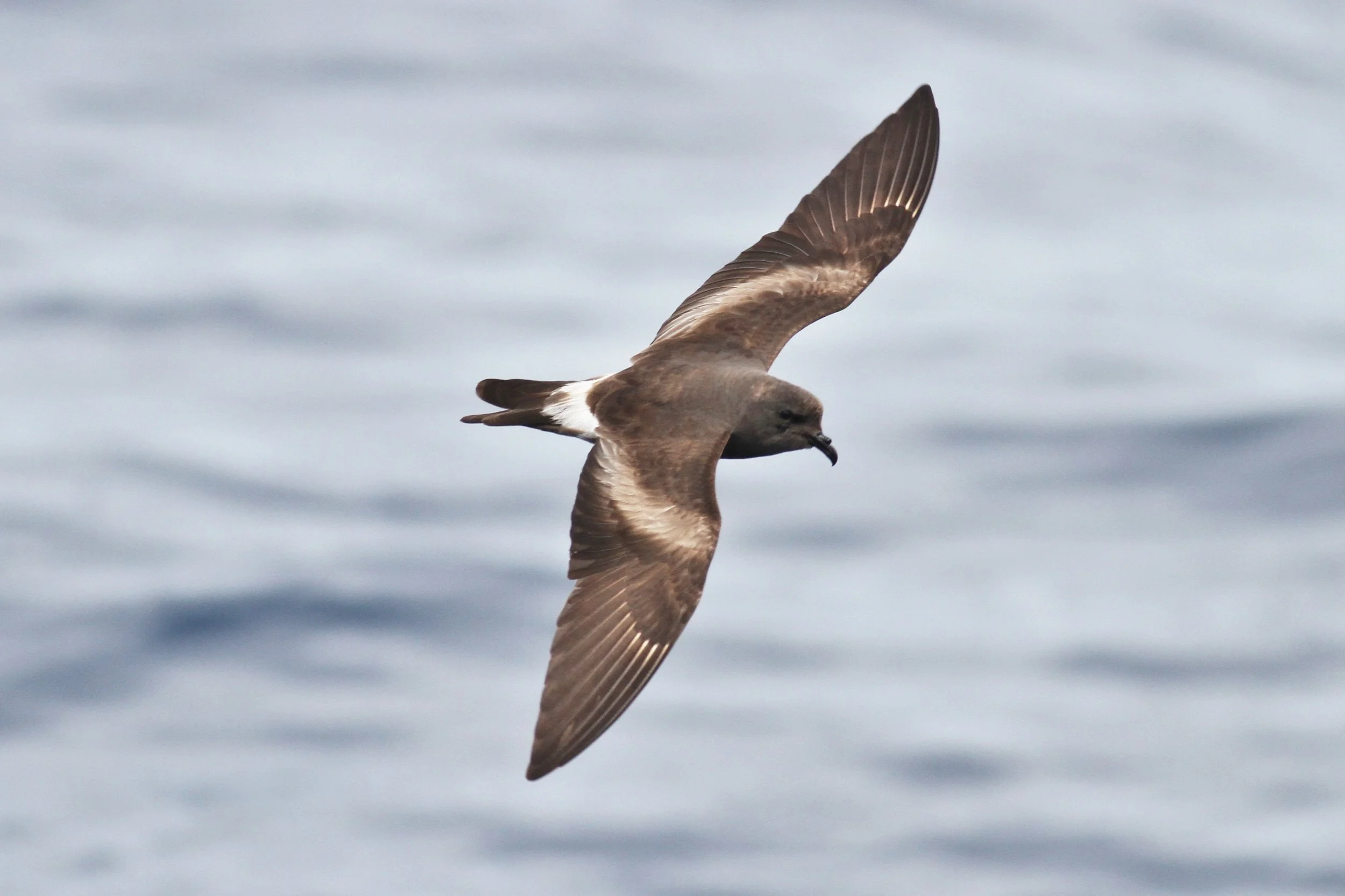
Leach’s Storm-Petrels are seabirds found across the Northern Hemisphere, with a large breeding population in Maine. The last statewide population estimate was 31,250 pairs on 33 islands! However, 90% of these pairs breed on just two islands. The Leach’s Storm-Petrel stands out from Maine’s other storm-petrel, the Wilson’s Storm-Petrel, due to its larger body and shorter legs, which are always tucked away during flight.
Late Bloomers
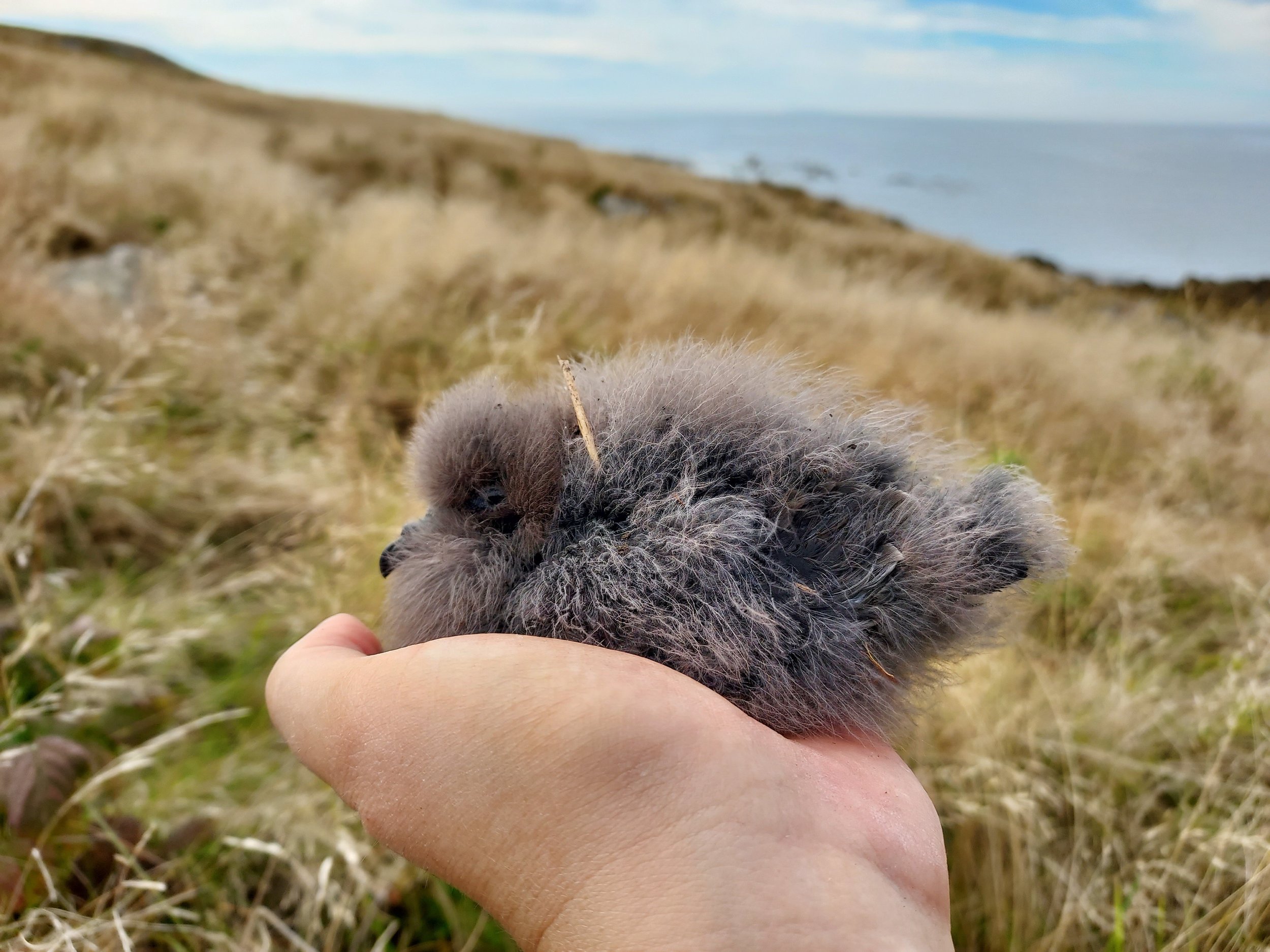
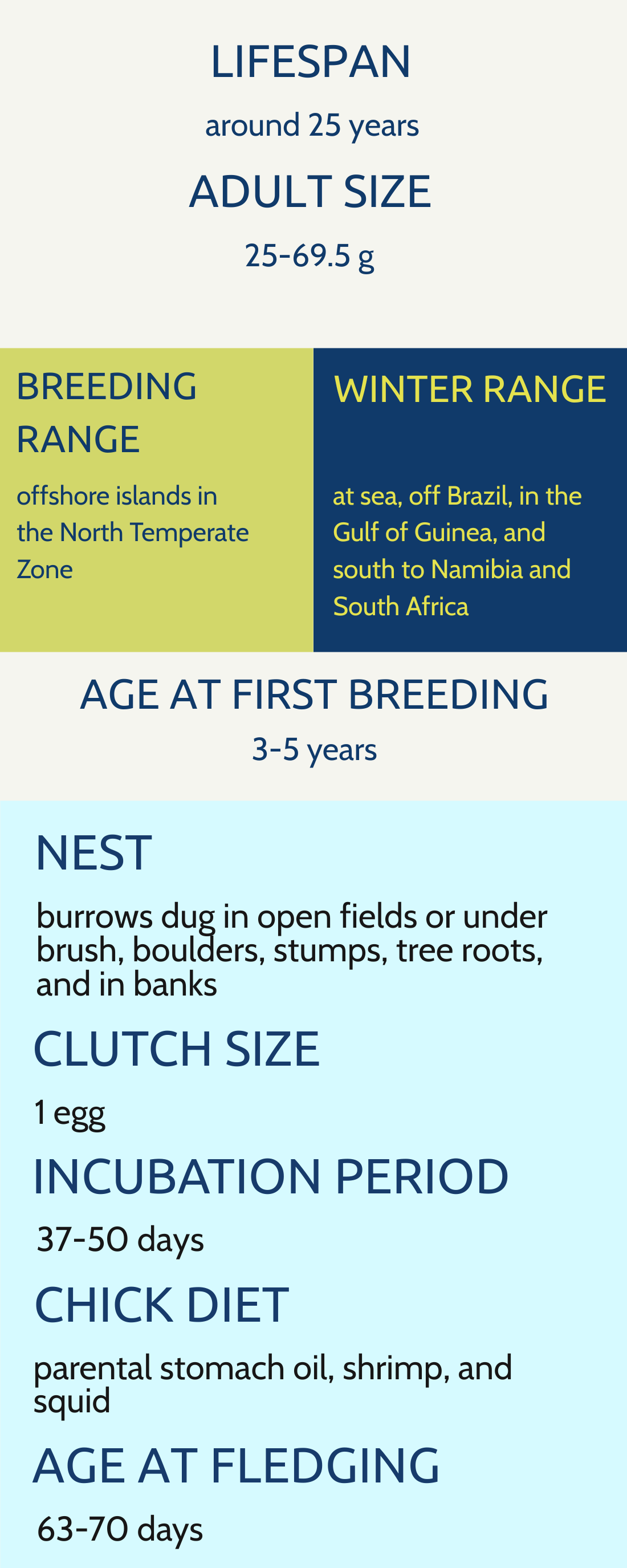
Leach’s Storm-Petrels lay one egg in a burrow, and they have an extended breeding season. This egg is white and may have purple, lilac, or red ring spots towards the egg’s larger end. Both sexes incubate the egg in burrows dug in open fields in stone walls, or under stumps and tree roots. It takes about 37- 50 days for storm-petrel eggs to hatch, and then chicks remain in their burrows for 60 - 70 days before they fledge. Often the USFW biologists find chicks in burrows all the way into October!
Smelly Birds
Leach’s Storm-Petrels are part of the ‘tubenose’ seabird order (Procellariiformes). Members of this group all have a distinct musty smell. Often, the presence of this strong musty smell at the entrance of a burrow can be used as an indicator that the burrow is being actively used by storm-petrels.
Night Life
This species is nocturnal, and they are most active during the new moon phase when nights are the darkest. They arrive and depart from nesting sites at night to reduce the chance of being intercepted by a predator. In order to see in the darkness, Leach’s Storm-Petrel’s have low-resolution vision.
Where Can I See Leach’s Storm-Petrels in Maine?
If you’re hoping to catch a glimpse of Leach’s Storm-Petrels in Maine, your best bet is to take a guided boat tour around the islands in the Gulf of Maine - bear in mind that these birds are nocturnal!
Browse our selection of highly recommended tour boat operators in the down east area. You’ll likely spot several other seabirds during your tour, including Atlantic Puffins and Black Guillemots.
As you continue learning about Leach’s Storm-Petrels, we hope you’ll be inspired to help us protect these fascinating creatures and their habitats!