
All About Seabirds / Common Eider
Common eider
Somateria mollissima
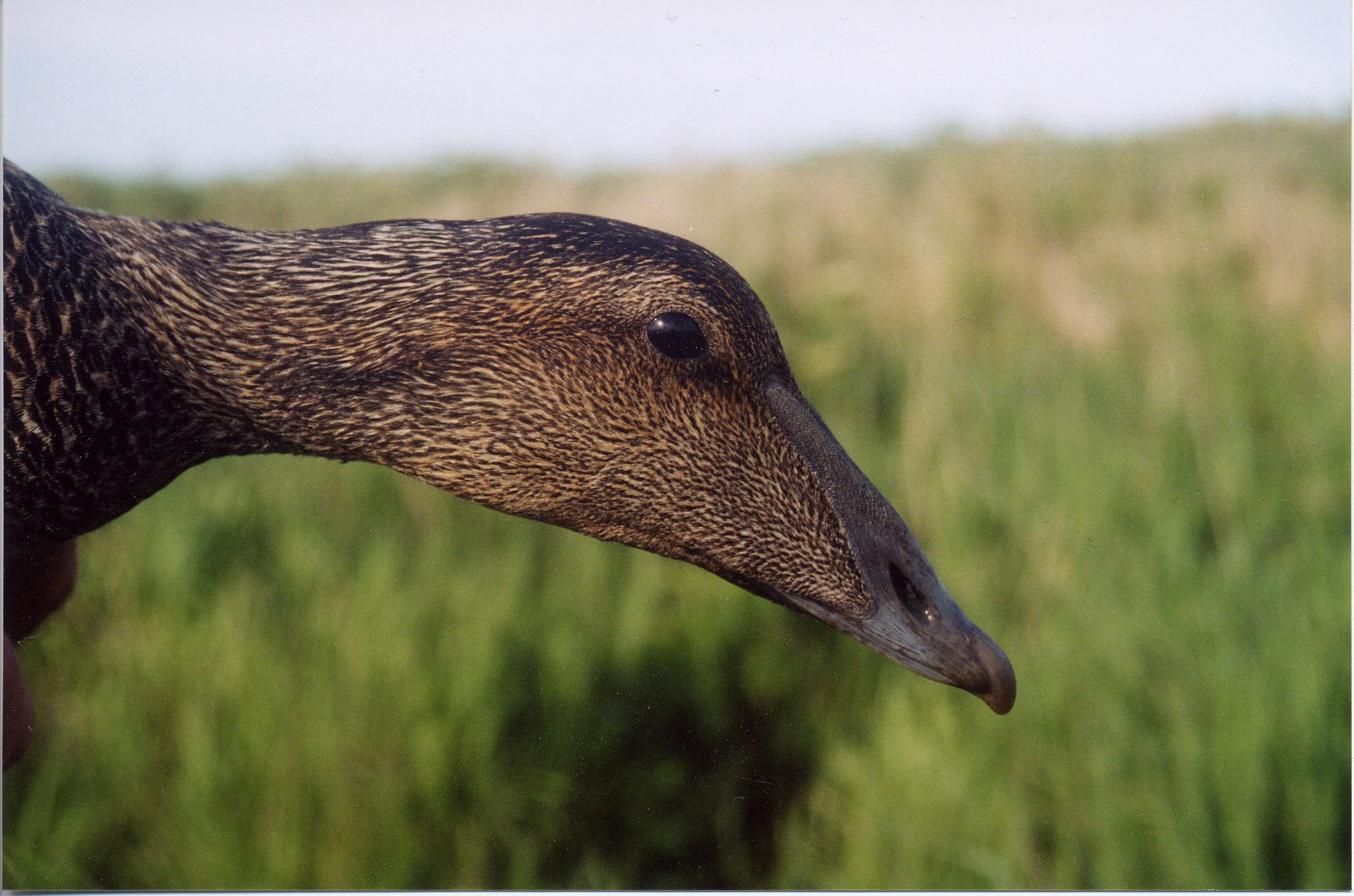
Common Eiders are large sea-ducks, well known for their downy feathers, which provide extremely effective insulation.
The World’s best insulation
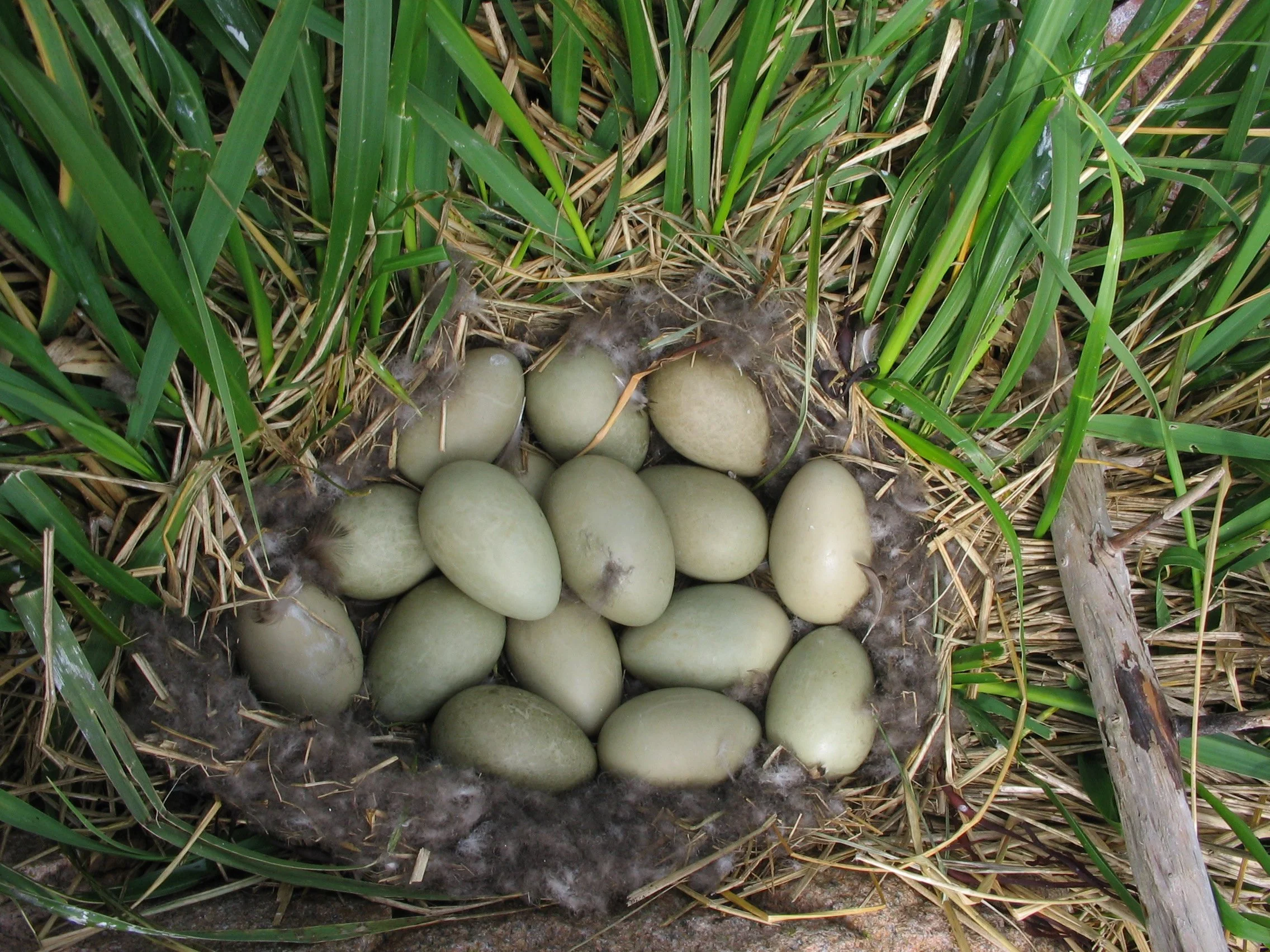
Eider down is such an effective insulator because the tiny barbs of each feather are so closely spaced that any air trapped among the microscopic structures becomes as viscous as honey. These small but mighty feathers ensure that eider chicks are kept warm in their far northern habitats. Humans have been using eider down for over a thousand years, but, thankfully, eider down is typically collected from empty nests, without any harm coming to the birds.
Plumage
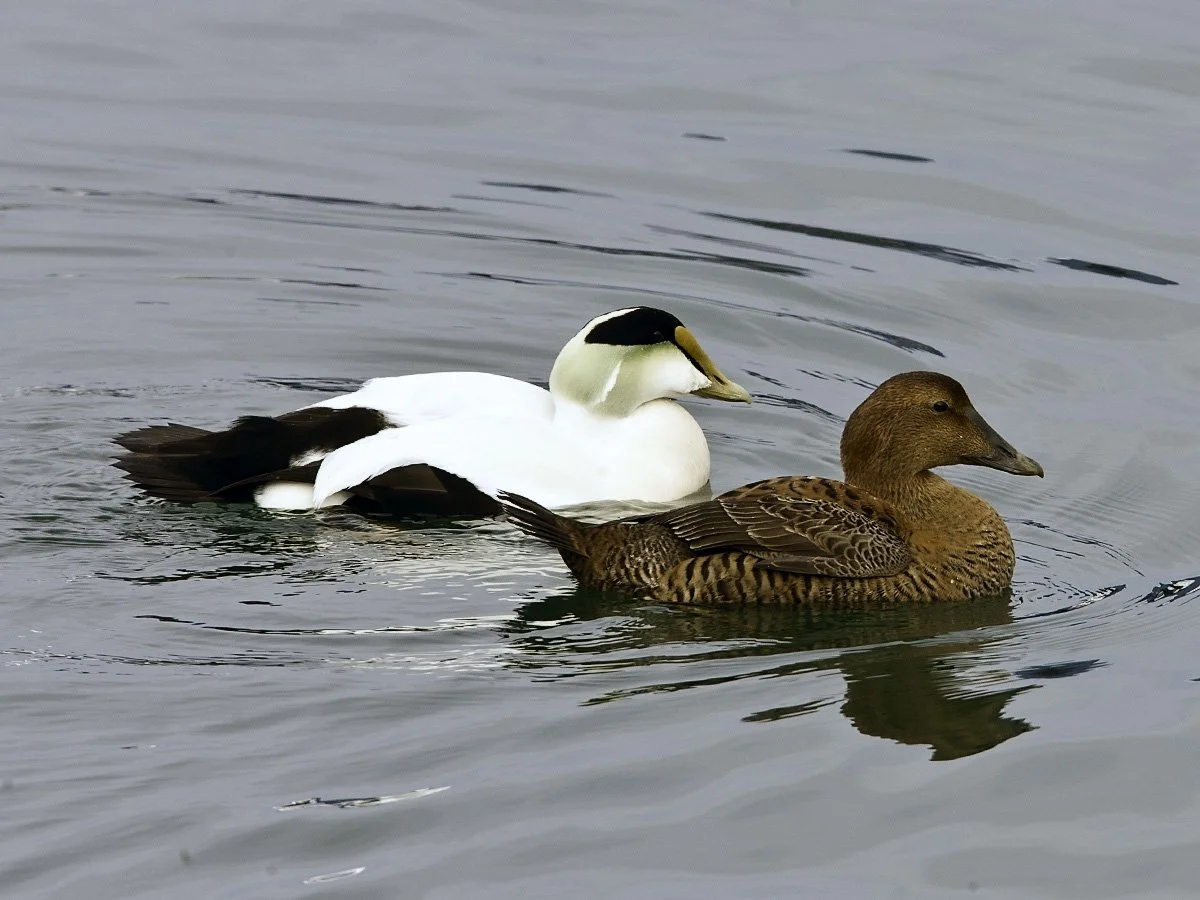
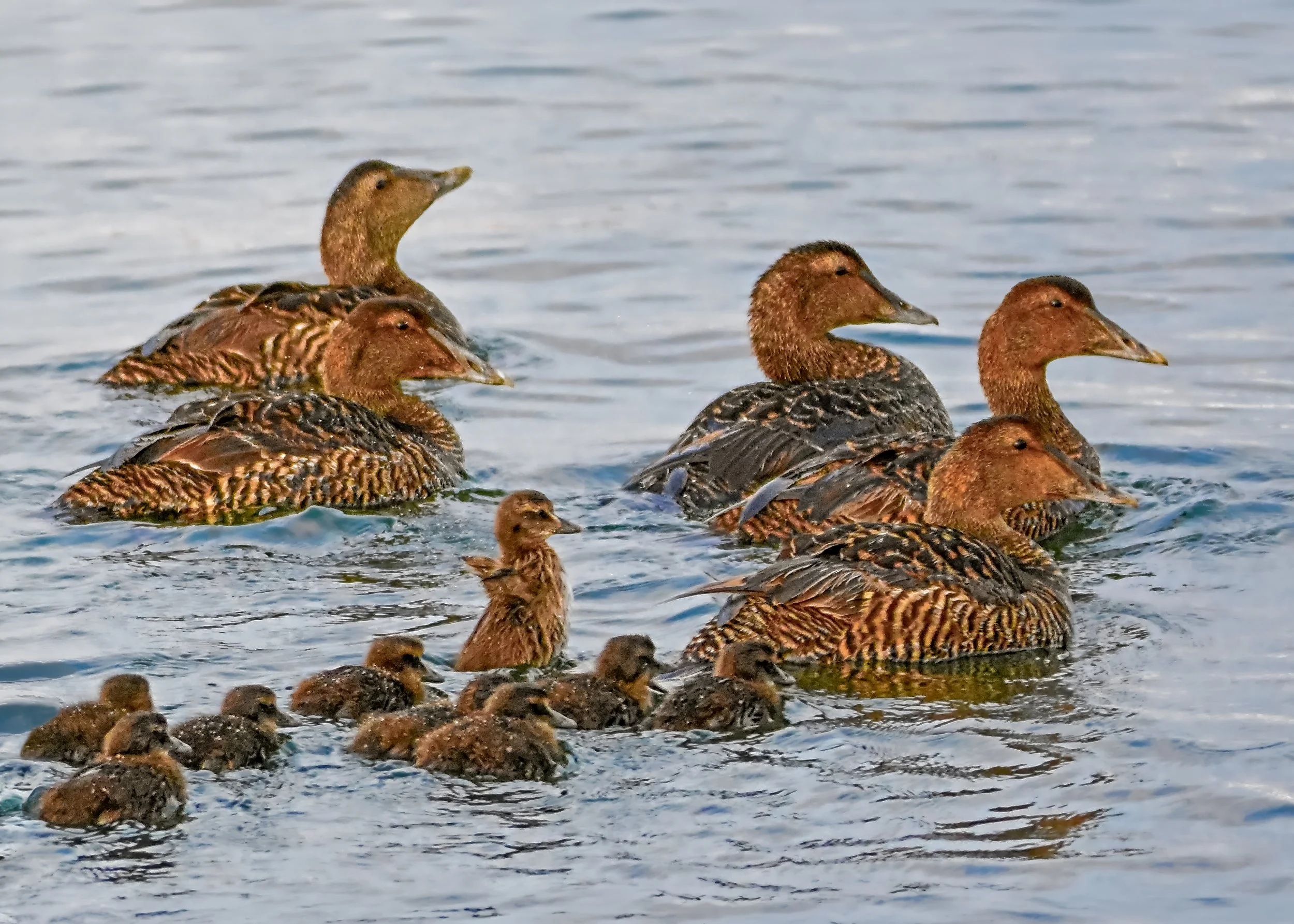
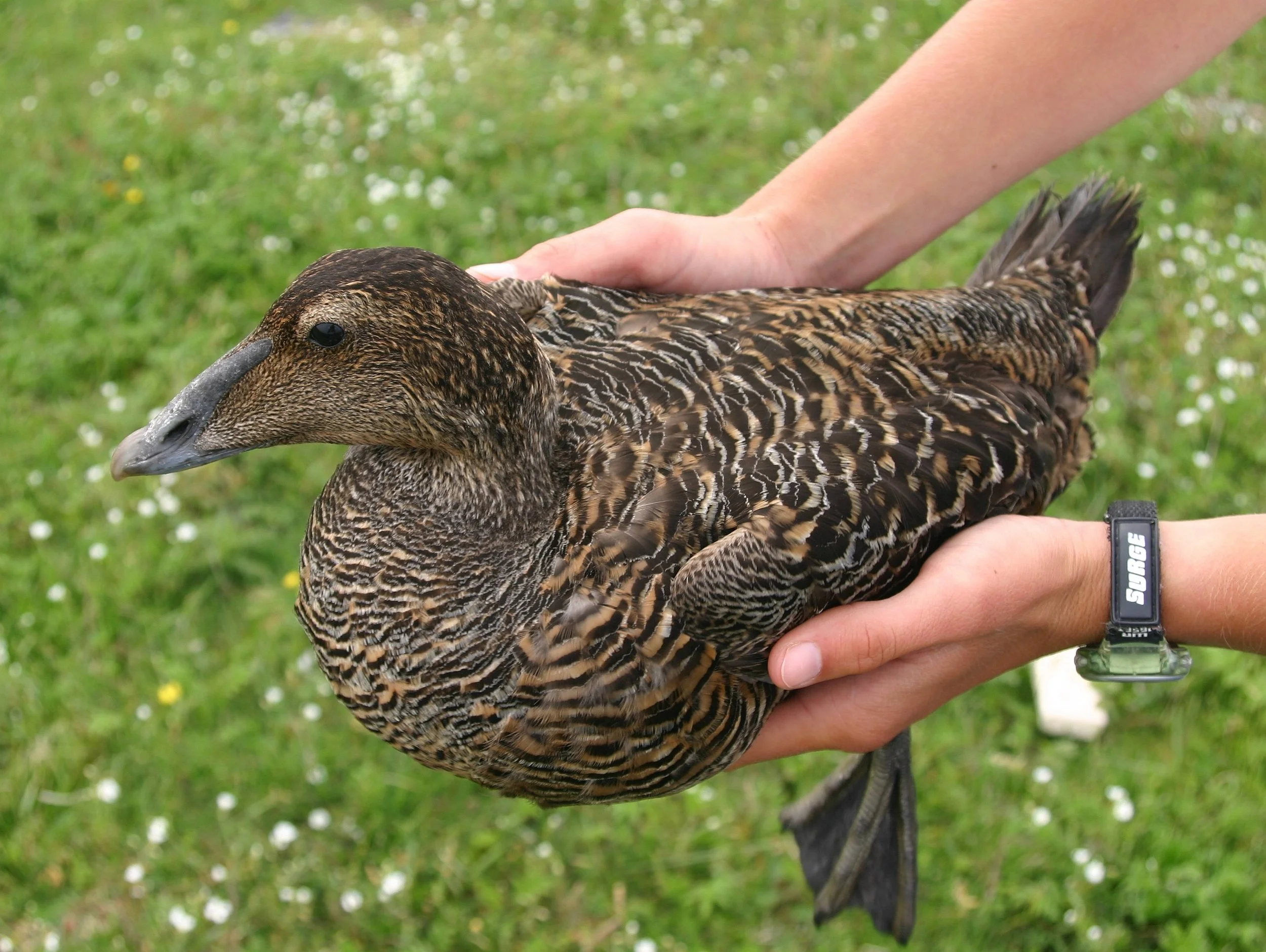
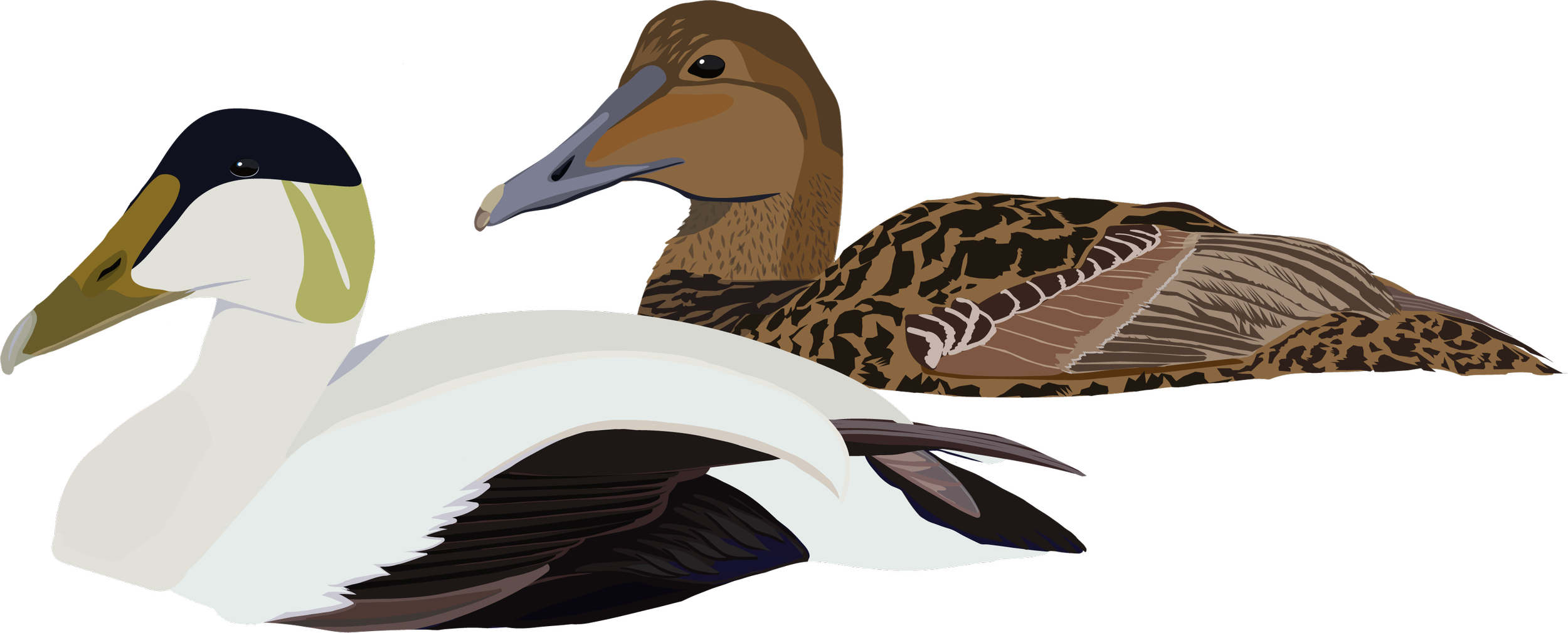
Common Eiders are a fabulous example of sexual dimorphism. Put simply, this means that male and female eiders wear distinctly different plumages. Males have a striking white body and head, with an indigo black cap, and sage green cheeks, whereas females are a range of browns, from dark chocolate to the orangy brown of a fallen leaf. This may be because females take care of nest building, incubation, and chick rearing entirely alone. The flashy feathers of the male eiders serve them in their displays to attract a mate, whereas the subtler female coats serve to camouflage and protect from predation.
Decline in FOod Sources
Common Eiders typically feast on aquatic invertebrates like mussels and urchins. Their primary food source, blue mussels, are rapidly declining due to the warming ocean waters, overfishing, and predation from the invasive green crab, dubbed “Maine's most destructive and costly invader” by the Department of Marine Resources.
Where Can I See Common Eiders in Maine?
During your next visit to Maine, be sure to schedule a tour with any of these fantastic birding tour boat operators. Keep your eyes peeled for these fascinating birds, and be on the lookout for Atlantic Puffins and Razorbills too!
From the Friends of Maine Coastal Islands Wildlife Refuge, we hope you have a great time birding in Maine!
As you continue learning about Common Eiders, we hope you’ll be inspired to help us protect these fascinating creatures and their habitats!