METINIC ISLAND
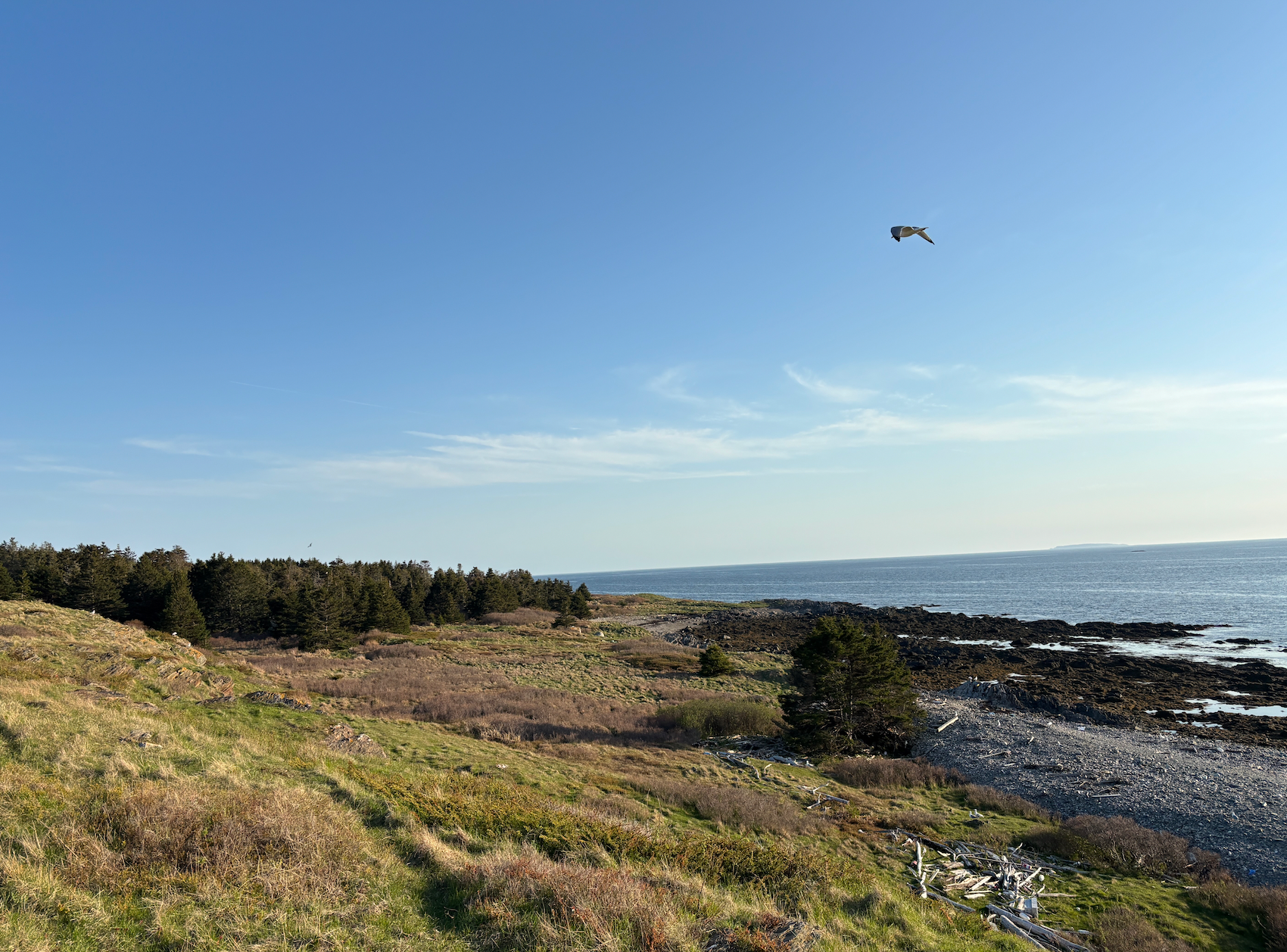
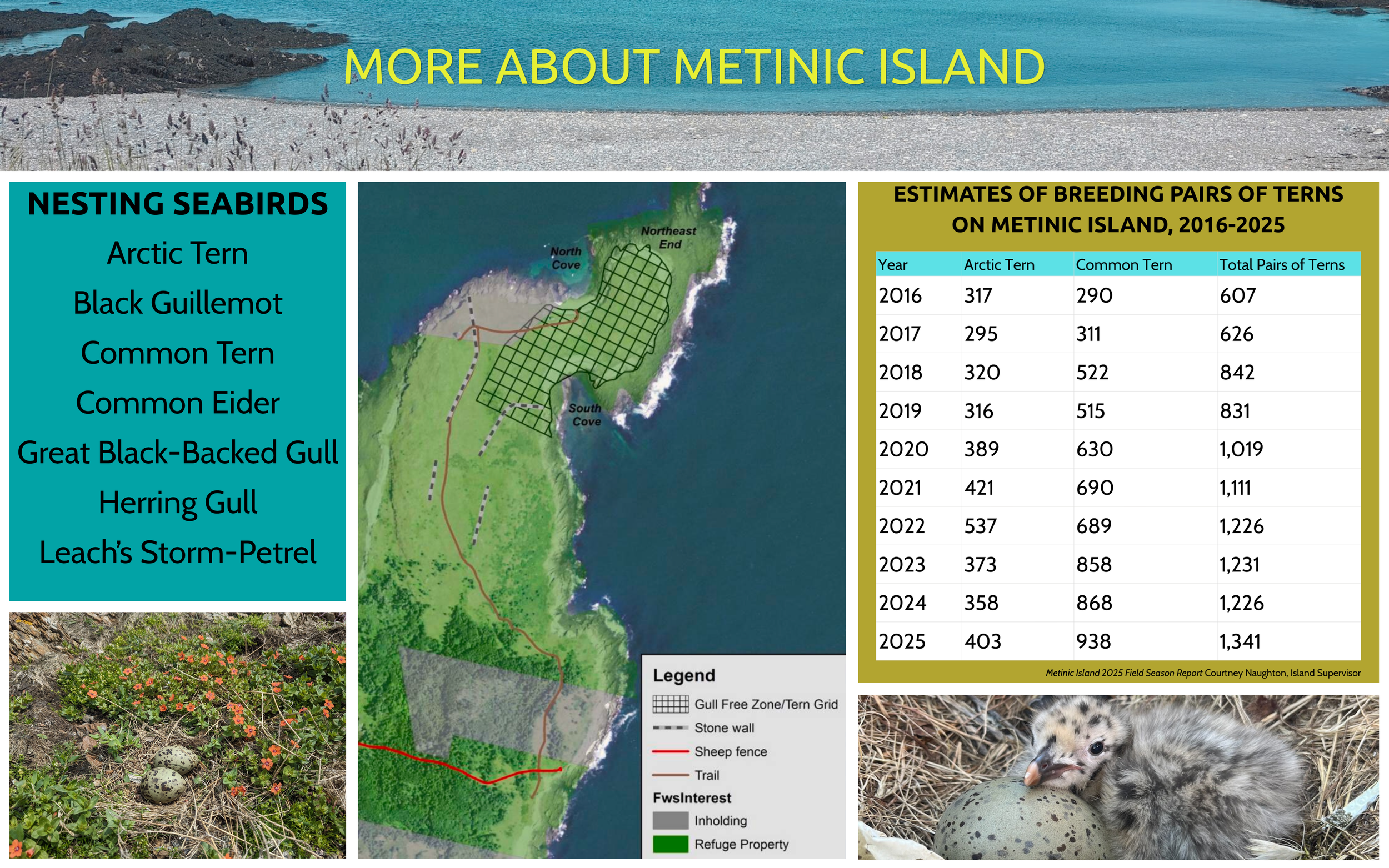
Located seven miles offshore, in the Town of Matinicus Isle Plantation, Knox County, Metinic Island is one of three Maine Coastal Islands National Wildlife Refuge Islands that FOMCI helps to fund seasonal biological technicians. The interns census Common and Arctic Terns, monitor Leach's Storm-Petrels and Black Guillemots, control predators, conduct food habit and productivity studies, and monitor vegetation response to grazing.
The Refuge portion of Metinic Island is closed to public use during the seabird nesting season: April 1 to August 31. Informational signs alerting visitors to this closure are in place.
Terns on metinic
Information provided by Metinic Island 2025 Field Report
Metinic Island is a 330-acre island located approximately six miles southeast of St. George in Knox County, Maine. The island includes several habitat types including grasslands, bayberry shrubs, and dense mixed spruce and hardwood forest. These diverse habitats attract a significant number of migrating and breeding birds to the island. The U.S. Fish and Wildlife Service (USFWS) acquired 149 acres on the northern end of Metinic Island in 1994. At the time of acquisition, few terns bred on the island due to the presence of nesting gulls.
Maine Coastal Islands National Wildlife Refuge (MCINWR) initiated a seabird restoration effort on the island in 1998, and Metinic is now one of six active projects managed by the Refuge. Seabird restoration efforts included predator control and social attraction (i.e., sound system and decoys). The island supports a resident flock of around 120 sheep which the Refuge utilizes to manage vegetation on the north end of the island during the nonbreeding season.
Since restoration began, the Arctic and Common Tern colony has fluctuated in size, including complete colony abandonment in 2012 due to extensive predation by gulls and severe weather. The colony reestablished in 2013, and since that time has remained stable or shown increases each season. Although terns have bred on the southern end of Metinic in the past, it is suspected that gulls may limit the number and productivity of any terns attempting to nest in this privately-owned section of the island.
BROWSE EBIRD LISTINGS
eBird is a platform that allows you to record and track bird sightings in real time! Each recording contributes to the Cornell Lab of Ornithology’s database helping to make more accurate statistical observations that impact conservation today!